
SECTION 3 - LEVERAGE
MODULE 11: LEVERAGE YOUR personal pitch
This module is about one of the most practical skills you can build before entering the workforce: knowing how to talk about yourself in a way that actually lands.
Understand what a personal pitch is and why it matters in your job search
Learning Objectives
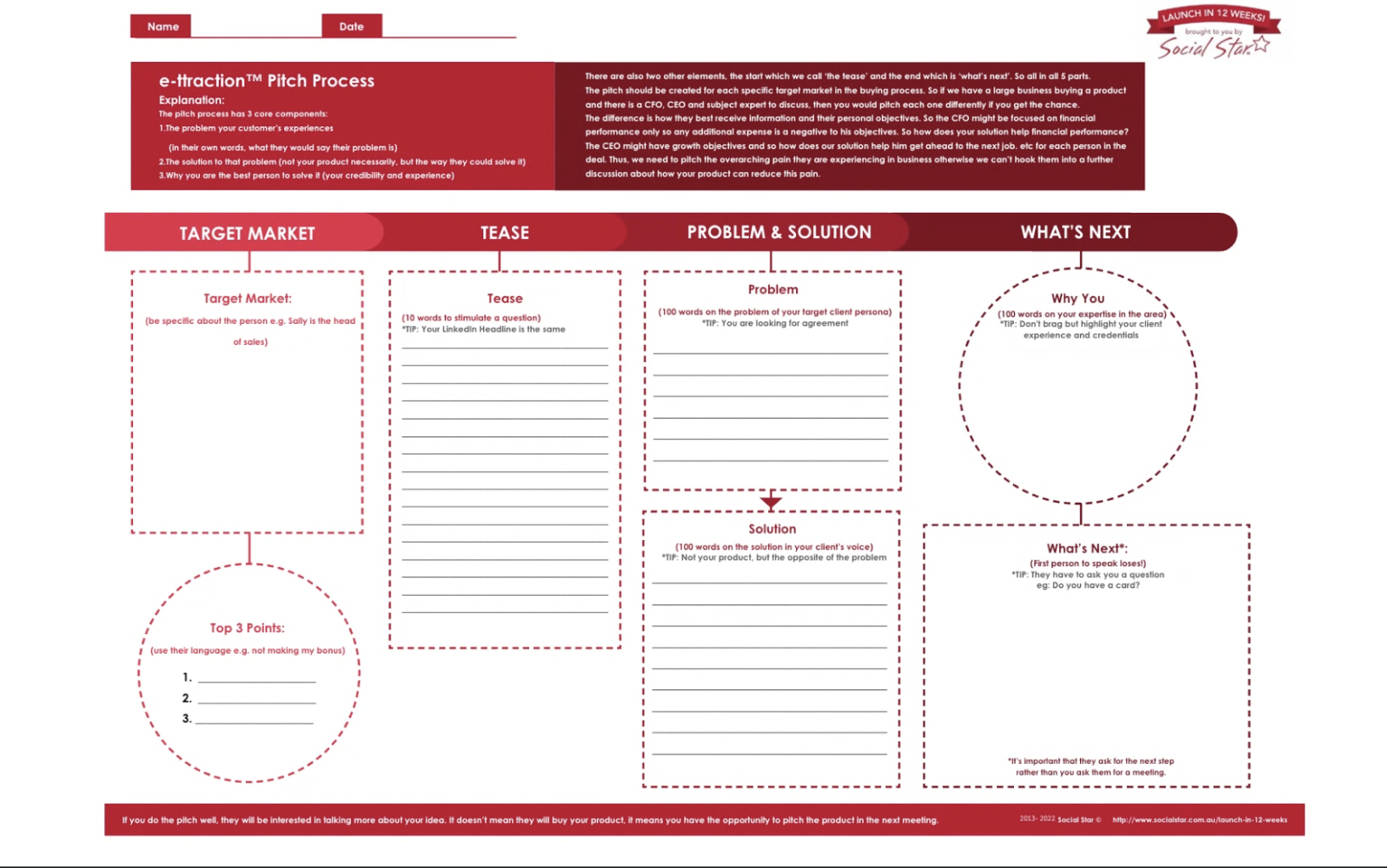
Build a clear, repeatable pitch using the Tease, Problem, Solution, Why You, What's Next framework
Adapt your pitch to different situations, from networking events to job interviews
Use your pitch to help others refer you to the right opportunities
Your personal pitch is how you communicate your value to an employer, a contact, or anyone who might connect you to your next opportunity. Get it right, and the people around you become a network that works for you, even when you're not in the room.
You will learn a simple, flexible framework: Tease, Problem, Solution, Why You, What's Next. It works in interviews, at networking events, in LinkedIn messages, and in casual conversations. Once you have it, you can adapt it to any situation.
Topic Items
Readings
-
Think about the people you already know. Friends, family, former lecturers, people you have met at events. If any of them understood clearly what you do and what kind of role you are looking for, they could refer you to someone who could help.
That is the point of a strong pitch. It is not just about impressing the person in front of you. It is about giving them something they can repeat to someone else.
If you do this well, you are suddenly not just one person looking for a job. You have an entire network looking for opportunities on your behalf.
-
Your pitch has three core things it needs to answer:
What problem do you solve for an employer?
What is your solution to that problem?
Why should they choose you?
Here is the key insight: no employer hires someone unless they have a problem. No one goes through the effort and cost of hiring a new team member without a reason. If you do not know what problem you solve, it is much harder to get the job.
Here is an example. Say you are applying for a marketing coordinator role. The employer does not just want a marketing coordinator. They want more leads, better content, someone to take ownership of their social presence, less pressure on the rest of the team. Those are the real problems.
If you walk in and talk about your skills in isolation, that is useful. But if you connect your skills directly to their problems, and back it up with evidence, that is when you become someone they genuinely want to hire.
-
Before you launch into problem, solution, why you, open with something that gets the other person leaning in.
At a networking event, if someone asks what you do and you give a standard answer, they will nod and move on. But if you say something specific and slightly unexpected, something they cannot quite place, they will ask you to explain. That is your moment.
The tease does not have to be complicated. It just has to be something that makes someone go: "Wait, tell me more."
Once they ask, you give the pitch. And because they asked, they are actually listening.
-
How you end the conversation matters just as much as how you start it.
Read the situation. Is this person a genuine contact who could help your job search? Are they someone who could introduce you to the right people? Adjust accordingly.
One approach that works well: do not ask for anything. Let them ask you. If your pitch lands, they will want to continue the conversation. Give them space to do that. A pause at the end of your pitch is not awkward. It is strategic.
If nothing comes of the conversation directly, connect with them on LinkedIn. They move from someone you met once to someone in your network, and your content does the follow-up work for you.
-
You need to practice this out loud, not just in your head.
Most people undersell themselves not because they lack value, but because they have never built the habit of talking about it clearly. Your pitch should feel natural, not rehearsed. The only way to get there is to use it.
Adapt it as you go. The problem you lead with might change depending on the role or the person you are talking to. The evidence you use for "why you" will develop as you gain more experience. That is exactly how it should work.
Your pitch also works in writing. Use the same framework in LinkedIn messages, cover letter introductions, or email outreach. The medium changes. The structure does not
Module Resources
What you'll cover in this video:
Why content is what keeps you visible to the people who can help you get hired
How to figure out the right content format for you based on your personality and strengths (writing, video, photography)
What kind of content to share and how to make it useful to your audience, not just about you
Why posting consistently matters more than posting perfectly
NEXT MODULE